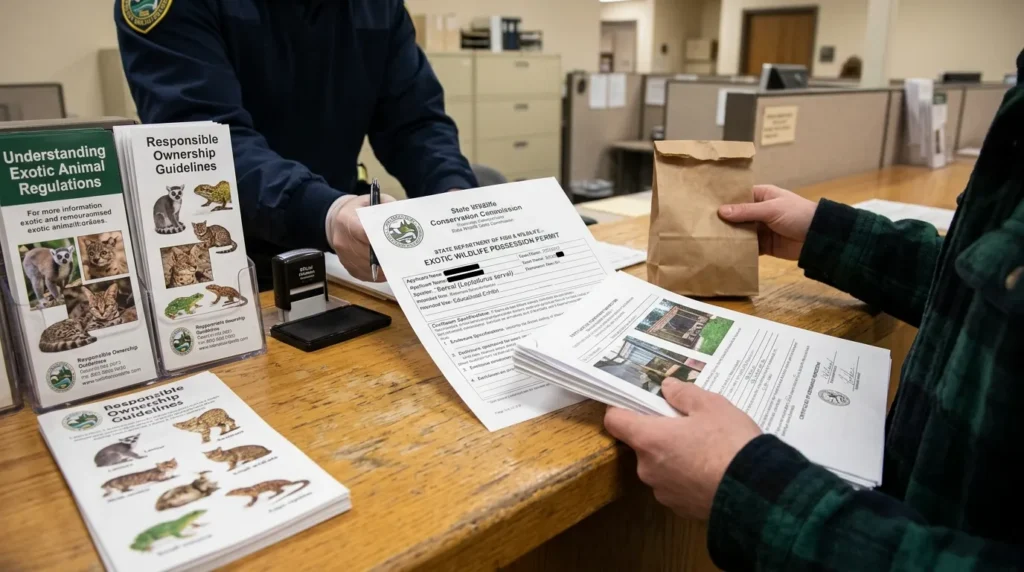
Exotic pet laws in the USA are a patchwork of state, county, and city regulations. This comprehensive guide covers the key laws in every state so you can own legally.
Navigating exotic pet laws in the United States is genuinely complex. There is no single federal law — instead you have a patchwork of state regulations, county ordinances, and city rules that can contradict each other.
The Most Permissive States Alabama, Nevada, North Carolina, South Carolina, and Wisconsin have some of the most permissive exotic pet laws in the country, allowing a wide range of species with few restrictions.
The Most Restrictive States California, Hawaii, and Georgia have the strictest exotic pet laws. California bans virtually all exotic animals as pets.
Federal Laws That Apply Everywhere The Lacey Act prohibits interstate transport of illegally obtained animals. CITES governs the import/export of endangered species. The Endangered Species Act protects specific listed species.
Key Categories
Big Cats: Banned federally for private ownership under the Big Cat Public Safety Act (2022) except for licensed facilities. Hybrids like Savannah cats are not affected.
Primates: Banned in most states. Legal in a handful including Nevada and North Carolina.
Reptiles: Most species legal with few restrictions. Some invasive species (Burmese Python in Florida) are banned.
Birds: CITES-listed birds require documentation proving legal captive-bred origin.
Always consult a wildlife attorney or your state's fish and wildlife agency before purchasing any exotic animal.